

When a corporate headquarters, a hotel, or a commercial multi-tenant property in Nigeria begins to feel outdated, the instinct of developers and occupiers is almost always the same: tear it down or move away. This editorial challenges that assumption. Across global markets and right here in Nigeria, asset transformation is proving that the future of commercial real estate often hides inside the buildings we already own.
We Love Starting Again
There is a powerful human tendency in commercial property to equate new with better. An office building begins to show its age—the elevator lobby feels tired, the cooling system groans under the afternoon sun, the floorplate no longer suits hybrid work—and the immediate corporate decision is to start shopping for new land or moving into a freshly built shell. An old hotel loses its shine, and investors default to planning a replacement build.
We see this constantly across the prime commercial hubs of Abuja and Lagos. Developers look at a 15-year-old structure in Victoria Island or the Central Business District and instinctively evaluate the cost of total demolition. But before writing off a substantial structure, it is worth asking a fundamental question: Is the building itself truly obsolete, or have we simply allowed the way we use it to become outdated?

Demolition is often a default setting rather than a considered strategy. When we look closer at aging commercial stock, we frequently find that the most difficult, expensive, and time-consuming elements to reproduce—the prime location, the structural foundation, the physical floor area, and the established civic footprint—are already perfectly intact.
Why Refurbishment Is Moving Up the Executive Agenda
In 2026, refurbishment and adaptive reuse have ceased to be secondary fallbacks; they are board-level real estate strategies. Global and regional research highlights why institutional investors and corporate occupiers are shifting away from pure ground-up builds:
JLL’s 2026 fit-out research further underscores that office fit-out costs have risen 2%–6% globally across key markets. When new build costs soar, corporate occupiers must look inward, asking where capital produces the highest operational yield.
A Renovation Is Not Just a New Coat of Paint
A central tenet of the Goodland philosophy is that cosmetic redecoration must never be confused with true space transformation. Repainting a corridor or replacing carpet tiles is maintenance; re-engineering a building’s spatial flow, operational performance, and human experience is transformation.

A comprehensive commercial transformation re-evaluates the entire building ecosystem:
“The goal of a modern refurbishment is not to make an old building look new. The goal is to make an existing building perform flawlessly.”
The Hotel That Had to Become Relevant Again
The hospitality sector provides a vivid illustration of why asset transformation works. Hotel guests evaluate properties against rapidly shifting international standards. When a landmark hotel loses its edge, the loss in RevPAR (Revenue Per Available Room) is immediate.

In Nigeria, where hospitality pipelines remain strong—W Hospitality Group’s 2026 report recorded 123,846 development pipeline rooms across Africa, with Nigeria leading in West Africa—existing iconic properties are choosing total internal repositioning. For instance, the multi-billion naira refurbishment program at the Abuja Continental Hotel was designed to realign a landmark property with evolving international luxury standards without forfeiting its prime geographical footprint. Similarly, major public-private reinvestments, such as the ₦26.91 billion refurbishment of the Ibom Hotel and Golf Resort, demonstrate how institutional assets are systematically updated to reclaim market leadership.
The Nigerian Reality: Power, Cooling, and Operational Readiness
Global architectural guides often overlook the operational realities of West African commercial property. In Nigeria, a commercial refurbishment cannot simply be a visual exercise—it must be an infrastructure upgrade.
Recent 2026 reporting on corporate Nigerian real estate reveals that occupiers now evaluate office space primarily by operational readiness, security, power backup reliability, and thermal cooling efficiency—not just rental rates. A beautifully redesigned open-plan workspace that becomes unbearably hot due to outdated chillers or fails during a power transition is an operational failure.

A Goodland-engineered refurbishment addresses these critical realities head-on:
• Thermal Isolation & Cooling: Upgrading facade insulation, tinting glass, and modernizing VRF/chiller systems to reduce electrical load while maintaining crisp interior temperatures.
• Power & Connectivity Integration: Hiding inverter systems, UPS backups, and heavy-duty cabling within bespoke joinery and raised floor systems.
• Water & Security Systems: Overhauling internal plumbing and embedding discreet biometrics into sleek reception desks.
When Should You Renovate—And When Should You Rebuild?
Goodland does not argue that renovation is a universal panacea. The decision between adaptive reuse and ground-up replacement must be based on objective commercial assessment.
• Structural concrete and columns are fundamentally sound.
• Floorplates can be adapted to modern workspace or guest layouts.
• Speed to market is critical—refurbishment generally takes 30–50% less time than ground-up approvals and construction.
• Ceiling heights are too low to accommodate ductwork, lighting, and modern Raised Access Floors.
• The allowable plot ratio (FAR) has significantly increased, making a far larger building legally possible on the land.
The Sustainability & Carbon Argument
Embodied carbon—the greenhouse gas emissions generated during material extraction, manufacturing, and building construction—is a critical factor in real estate asset management. Research published in Energy and Buildings (2026) demonstrated that adaptive reuse can reduce upfront carbon emissions by up to 46% and 50-year lifecycle emissions by nearly 20% compared to new construction.
Studies by Bekzhanova et al. (2026) show that retaining a building's original structural mass preserves 60% to 98% of its embodied materials. By avoiding unnecessary concrete pours and structural demolition, forward-thinking corporate entities in Nigeria can achieve environmental ESG targets while saving capital.
The Goodland Perspective: End-to-End Asset Transformation
At Goodland, we approach commercial refurbishment as an integrated, multi-disciplinary science. We recognize that transforming a building requires a seamless progression:
SPACE → FUNCTION → MATERIALS → FURNITURE → TECHNOLOGY → EXPERIENCE
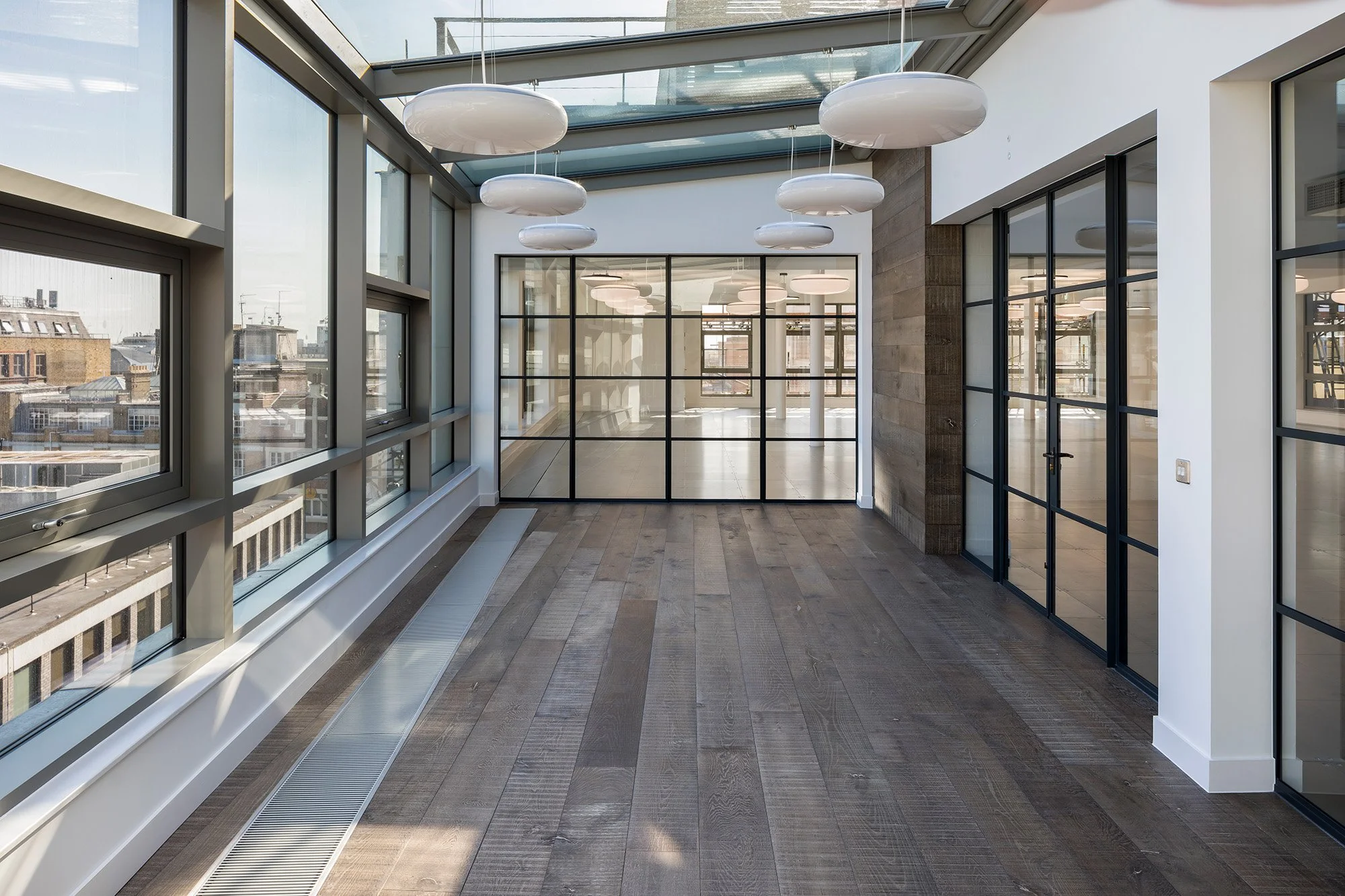
From initial structural assessments and 3D space planning to direct material procurement, bespoke joinery fabrication, smart automation, and final turn-key installation, Goodland aligns architectural design with asset value. We ensure that every naira invested in refurbishment yields measurable dividends in tenant retention, operational efficiency, and brand prestige.
Before you write off your commercial property, talk to us.
Goodland offers comprehensive asset evaluation and turn-key transformation services for corporate offices, hotels, and commercial developments across Nigeria.
Request an Asset Transformation Review
Executive Discussion
2 comments